Game On - A little to the Left x The Museum of Broken Relationships
Category:
Art Direction, Creative Strategy, Illustration
Location:
US
Date:
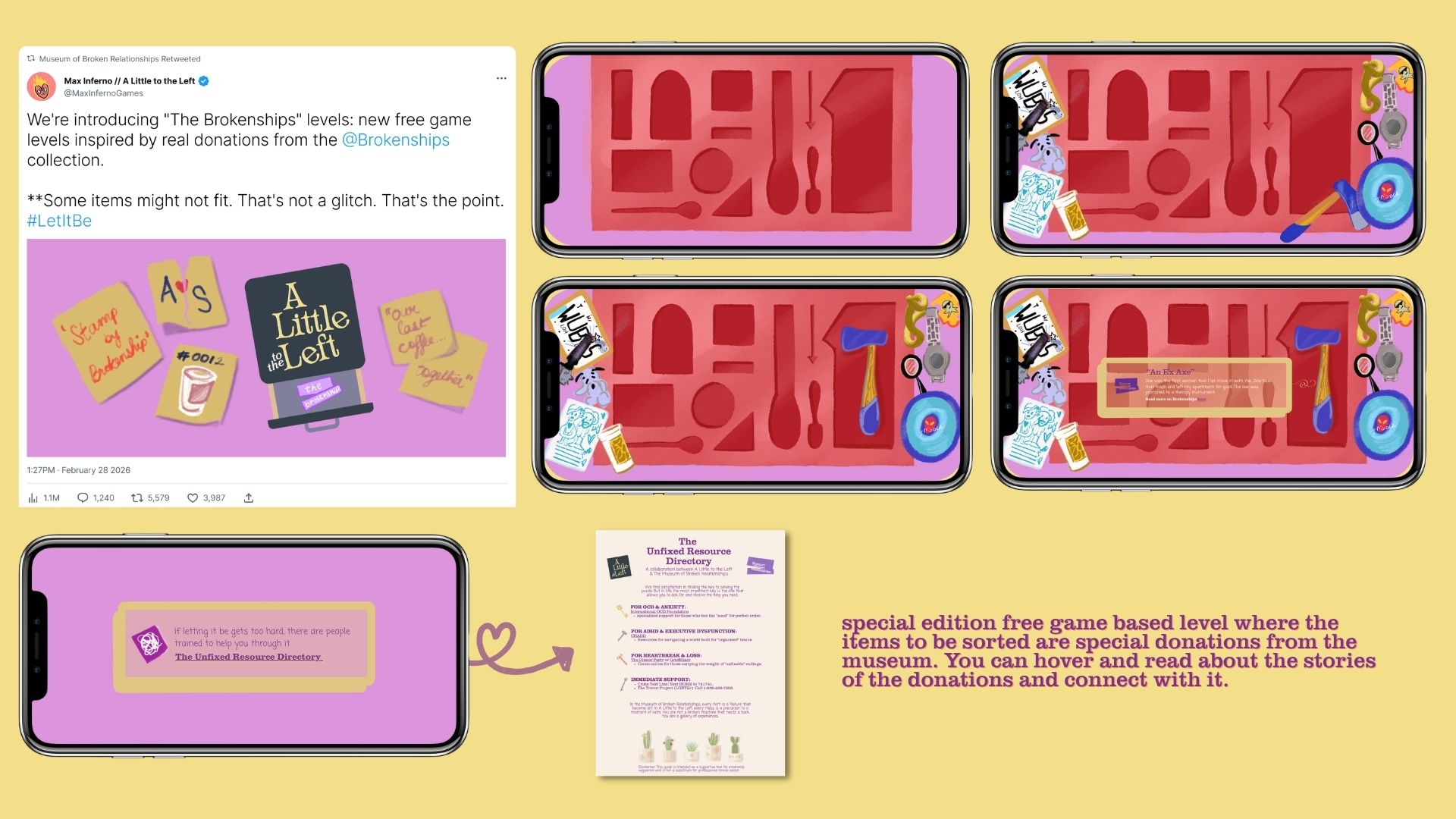
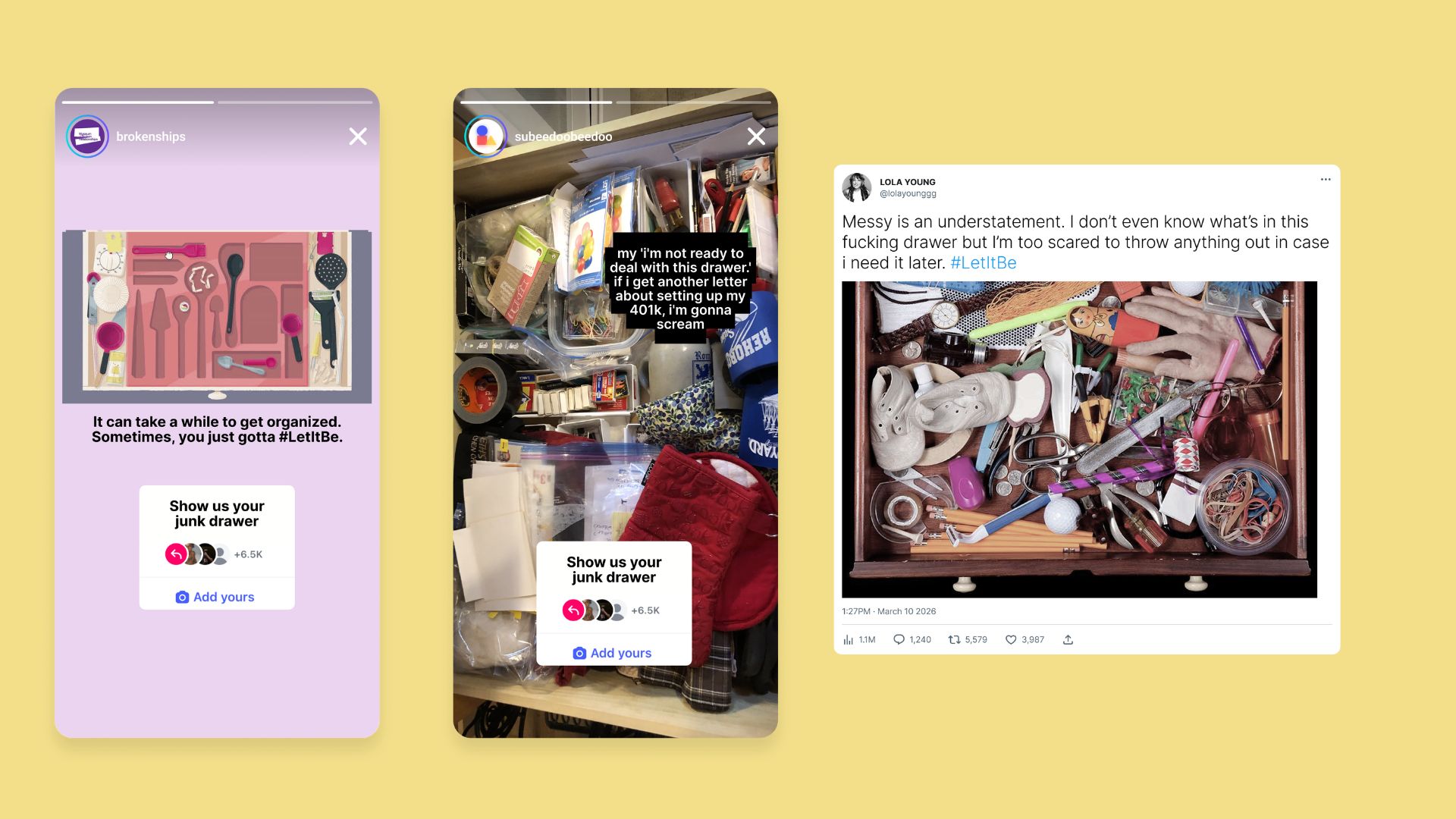

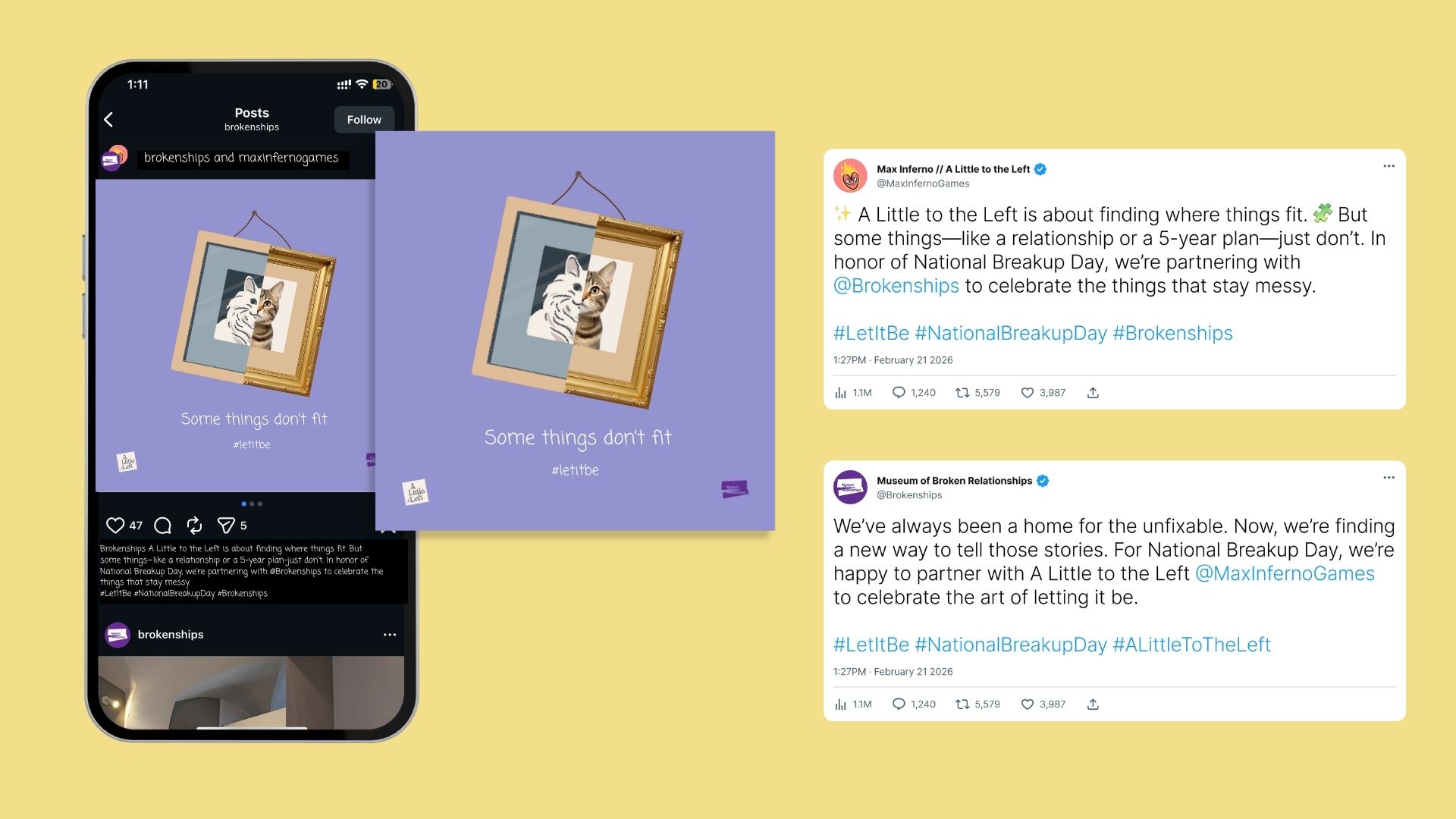
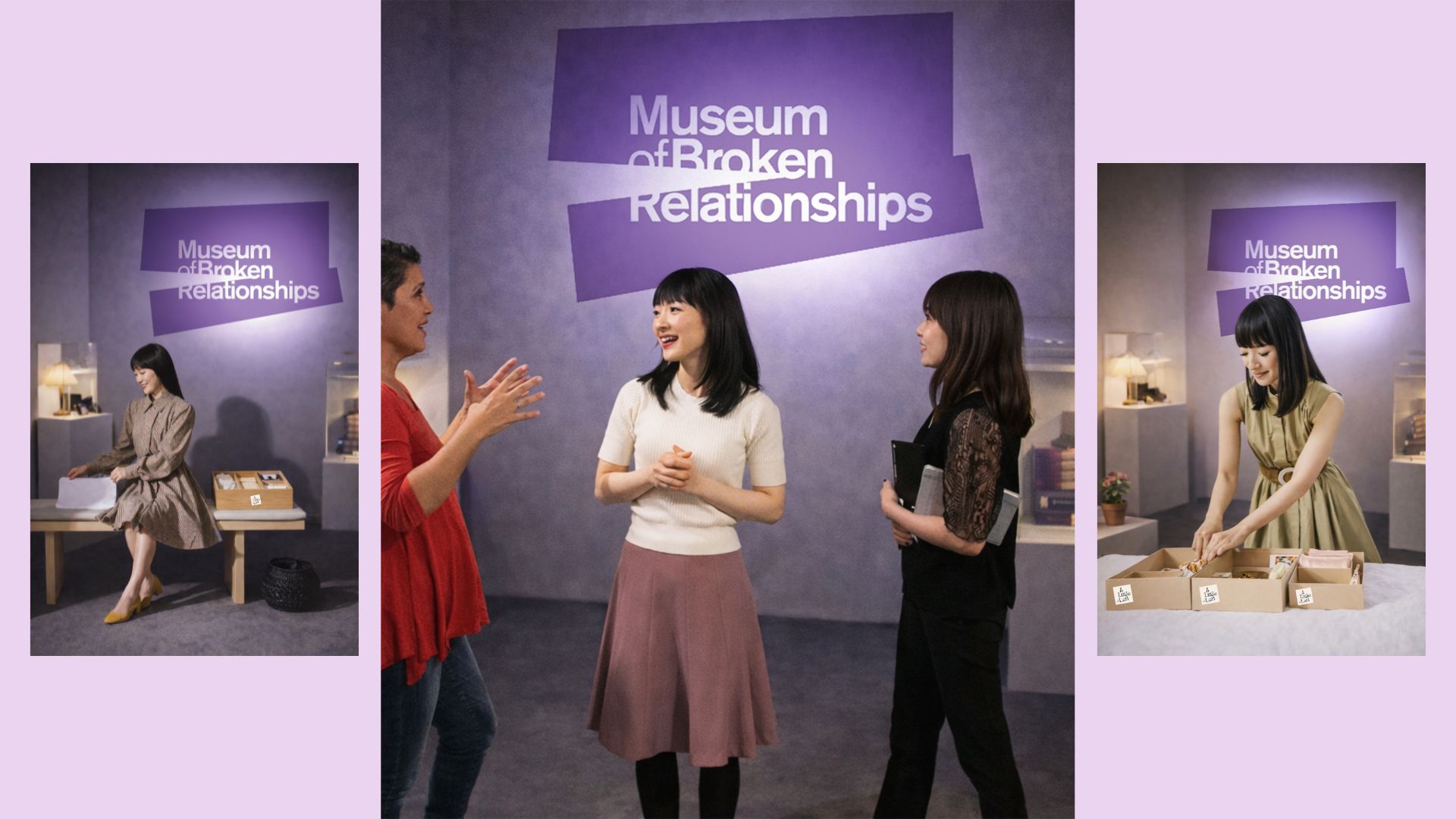
A Little To The Left is a cozy puzzle game that has you sort, stack, and organize household items into pleasing arrangements. In each level, the player must drag and drop objects to clean up an unorganized space. Some puzzles have more than one answer. Each puzzle comes with a “let it be” level that lets you skip it altogether if it gets too difficult. The Museum of Broken Relationships is a physical and virtual space created with the sole purpose of treasuring and sharing heartbreak stories and symbolic possessions. It was conceived by Olinka Vištica and Dražen Grubišić - initially as a joke about showcasing their own failed relationship together - and realized as a physical exhibition in 2006 until they found a permanent home in Zagreb, Croatia in 2010.
In A Little to the Left, the player has the impulse to restore order, and it can be frustrating when things aren’t fitting just right. At the Museum of Broken Relationships, all of the donations serve as acceptance of things that are simply unfixable. Instead of offering a solution or a “fix,” A Little To The Left and Museum of Bad Relationships offer their audience a space for processing without the expectation of a solution. The same solutions don’t work for everyone and that’s ok. The museum provides the avenue for displaying the mess, and the game facilitates the brain space to process it. Together, they help people move from the frustration of ‘why won’t this fit?’ to the peace of ‘it doesn’t have to fit.’
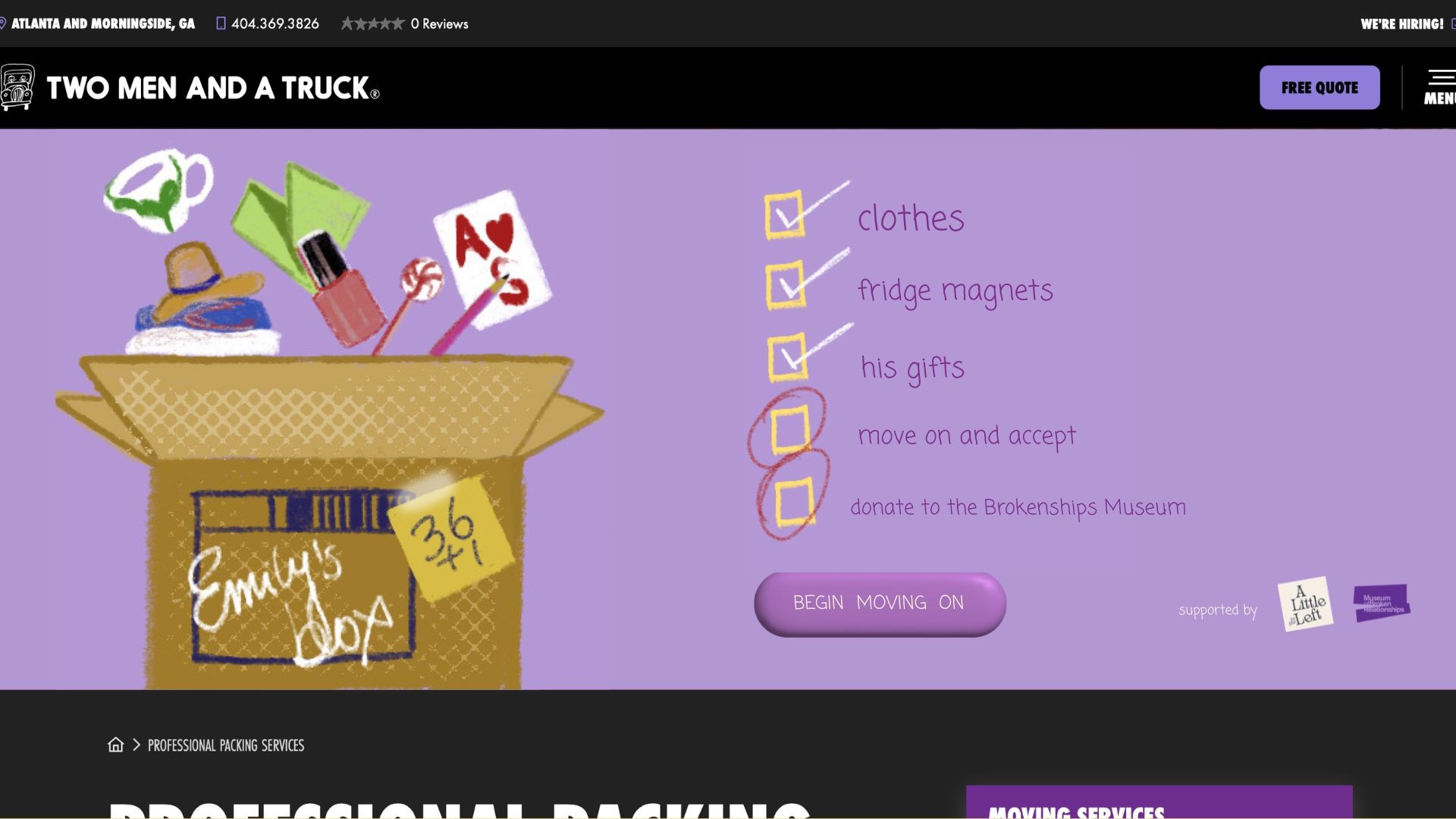
We live in an era of aggressive self-improvement. We are convinced that every problem - from our messy closets to our messy relationships - can be “hacked,” optimized, fixed, curated, and tied up with a perfect bow. If a relationship fails, we read a book to fix our attachment style. If our house is messy, we follow Marie Kondo’s guide to tidying up. We’re rarely able to just exist in messiness and unfinished projects. This creates immense anxiety and shame when life ultimately becomes stubbornly messy.